

In today’s competitive educational landscape, many parents and educators feel pressure to introduce academic skills earlier and earlier. While early exposure to literacy and math can be beneficial when presented in developmentally appropriate ways, research consistently shows that young children thrive best when their social-emotional development is prioritized before formal academics.
The early childhood years—roughly birth through age five—are a critical period for building the emotional, social, and cognitive foundations that support lifelong learning. When caregivers and educators focus on relationships, play, and emotional growth, they are not delaying academic learning. Instead, they are laying the groundwork that makes meaningful learning possible later on.
.
Social-Emotional Skills Are the Foundation for Learning
Before children can fully engage with academic content, they need to develop important life skills such as emotional regulation, self-confidence, cooperation, and resilience. These abilities allow children to manage frustration, work with others, and stay focused on tasks.
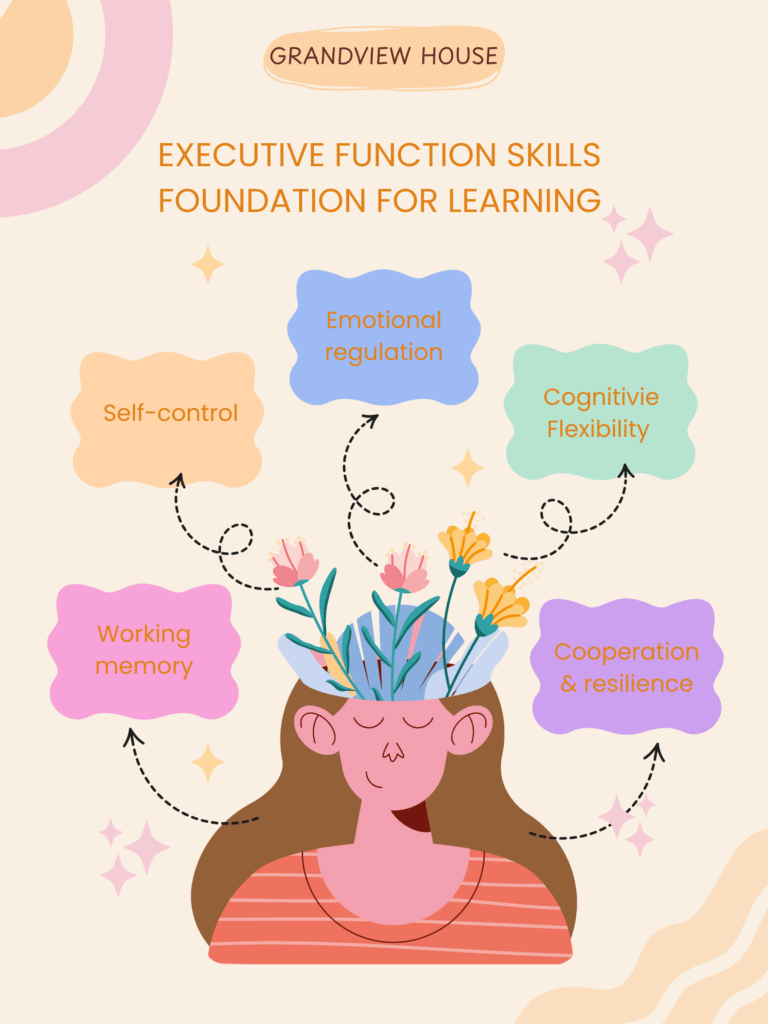
Research from the Harvard Center on the Developing Child highlights the importance of executive function skills, including self-control, working memory, and cognitive flexibility. These skills are shaped through early relationships and social experiences and are among the strongest predictors of long-term academic success.
In other words, a child who can regulate their emotions, listen to instructions, and persist through challenges is far more prepared to succeed academically than a child who has simply memorized early academic concepts.
Brain Development Happens in Stages
During the early years, children’s brains are rapidly developing in areas related to emotional regulation, relationships, and executive functioning. Young children learn best through hands-on exploration, social interaction, and play.
Developmental theorist Lev Vygotsky emphasized that imaginative and social play is one of the most powerful drivers of cognitive development in preschool-aged children. Through play, children practice communication, learn to negotiate with peers, and develop the self-regulation skills needed for structured learning later on.
Pushing formal academics too early can conflict with these natural developmental processes and may lead to frustration or disengagement.
Play Is a Powerful Learning Tool
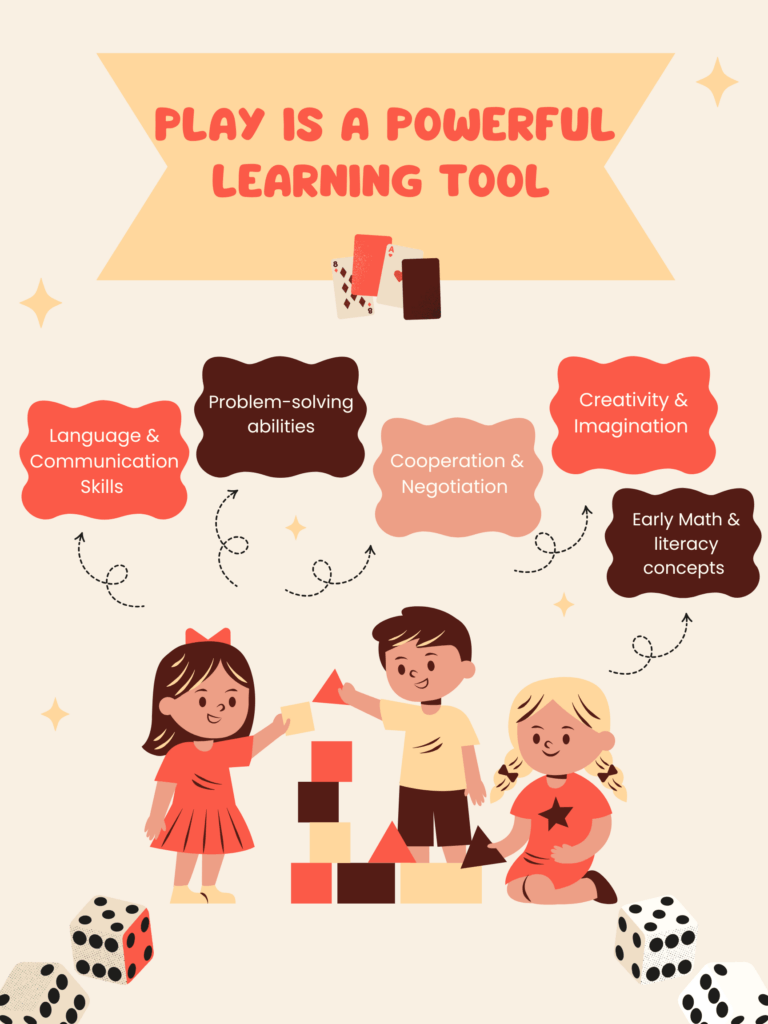
While play may appear simple, it is actually one of the most effective ways young children learn. Research by Pyle and Danniels (2017) found that play-based learning environments support both social-emotional development and emerging academic skills.
Through play, children develop:
Language and communication skills
Problem-solving abilities
Cooperation and negotiation
Creativity and imagination
Early math and literacy concepts
Similarly, Weisberg, Hirsh-Pasek, and Golinkoff (2013) found that guided play, where adults support learning through playful interactions, promotes language development, executive function, and social competence more effectively than rigid academic instruction.
Strong Relationships Support Learning
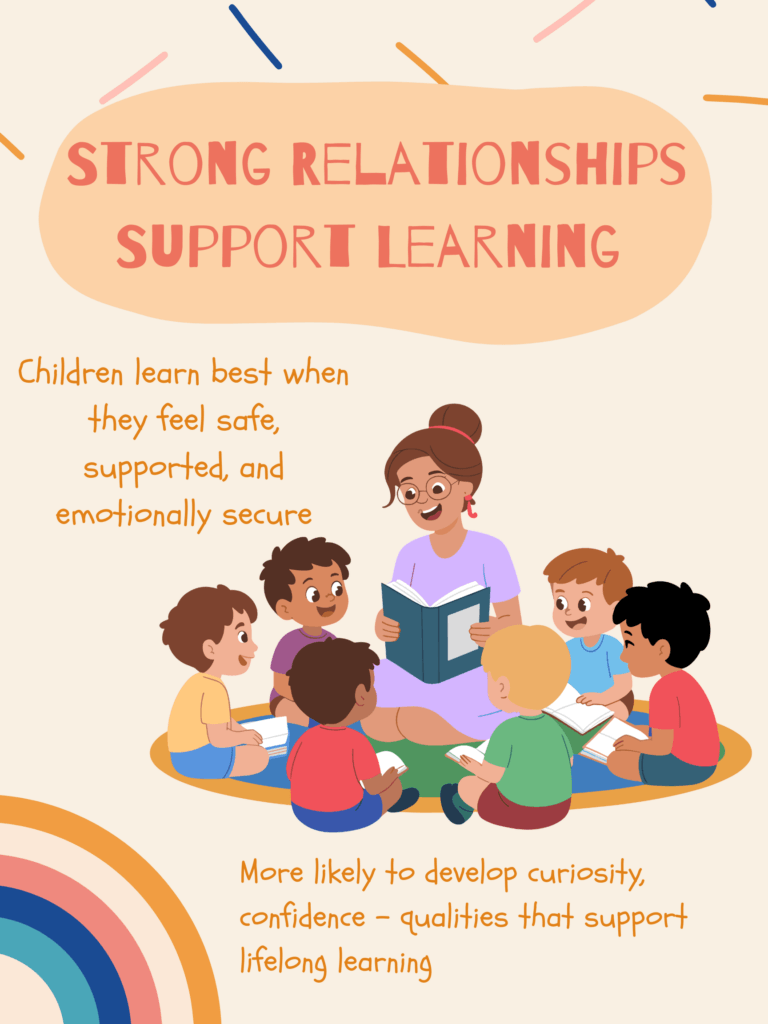
Children learn best when they feel safe, supported, and emotionally secure. Positive relationships with caregivers and teachers create an environment where children feel comfortable exploring, asking questions, and trying new things.
Organizations such as the National Association for the Education of Young Children (NAEYC) emphasize that developmentally appropriate early childhood programs should focus on responsive relationships, play, and exploration rather than early academic pressure.
When children feel emotionally secure, they are more likely to develop curiosity, motivation, and confidence—qualities that support lifelong learning.
Early Academic Pressure Can Backfire
Although many families worry that delaying formal academics may put children at a disadvantage, research suggests the opposite. Studies have shown that pushing academic instruction too early can lead to:
Increased stress and anxiety
Negative attitudes toward school
Reduced creativity and motivation
Economist James Heckman, whose research on early childhood development earned a Nobel Prize, found that non-cognitive skills such as persistence, motivation, and self-control are stronger predictors of long-term success than early academic skills.
Children who develop these social-emotional skills early are more likely to succeed not only in school, but throughout their lives.
Building the Right Foundation
The goal of early childhood education should not be to accelerate academics prematurely, but to build the foundation that makes learning possible. When children are given time to develop emotionally, socially, and creatively, they gain the confidence and skills needed to embrace more formal learning later on.
By prioritizing play, relationships, and emotional growth, caregivers and educators are helping children develop the tools they need to thrive—not only in school, but in life.
.References
Heckman, J. (2012). The case for investing in disadvantaged young children.
Pyle, A., & Danniels, E. (2017). A continuum of play-based learning: The role of the teacher in play-based pedagogy. Journal of Early Childhood Research.
Weisberg, D., Hirsh-Pasek, K., & Golinkoff, R. (2013). Guided play: Where curricular goals meet a playful pedagogy. Mind, Brain, and Education.
Vygotsky, L. (1967). Play and its role in the mental development of the child.
National Association for the Education of Young Children (NAEYC). Developmentally Appropriate Practice Position Statement.
Center on the Developing Child, Harvard University. Executive Function & Self-Regulation.